28.8.13

Basically

As Ehud Barak once said "Israel is a villa in the jungle". It's a statement that's certainly ringing true at the moment. While I don't expect Assad to go all out and hit Tel Aviv when the US cruise missiles start falling, which seems to be the predetermined conclusion already. I wouldn't entirely put it past him though. 

However, seeing that his main objective is to stay alive and in power, it seems obvious that starting a fight with Israel would be the worst idea possible if he's looking to keep things that way. You can bet that any attempt to target Israeli population centers or sensitive government or military sites by the Assad regime would be the casus belli for us to take him and his cohorts out of the game entirely. 

Rothschild and Allenby St, Tel Aviv

27.8.13

Greetings From Asbury Park, NJ

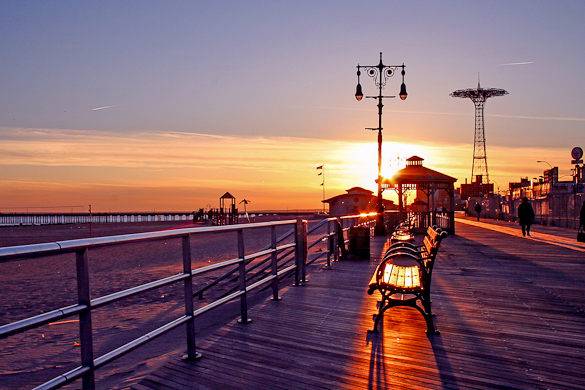
I try my best to keep my feelings of nostalgia in check each summer, but this is the exact time when it just becomes impossible not to allow them to take over. Even with the spectacular beaches and turquoise sea in Israel, in my biased opinion, there's still nothing that can compare to the overall atmosphere of summertime back in New York. Of course, I can't pretend to be partisan. I'm sure if you ask a native Israeli, they'll likely tell you the opposite. From my standpoint though, it's all a moot point. From riding the A-Train down to Rockaway Beach, to day trips out to Coney Island, and most infamously, weekends at the Jersey Shore. It really doesn't get any better, and I can't wait to be back next year.

NY Habitat. Coney Island, Brooklyn, NY.

Here is one of my favorite photo exhibitions from The New Yorker. It serves as just another indication to remind me that summers here in Israel don't have anything on those back home. Forgetting the fact that I wasn't even born when any of these pics seem to have been taken, I think the point is pretty obvious.

Seaside Heights, New Jersey. 1980. The New Yorker


“It felt like you were inside a Bruce Springsteen song,"


Palace Amusements, Asbury Park, New Jersey. 1980.

26.8.13

Taliban in Jerusalem

If you think that the Burqa is an exclusive phenomenon unique solely to ultra conservative sectors in Islamic societies in places like Afghanistan, think again. The rumors of Taliban style women being sighted in Jerusalem and in particular, Beit Shemesh have been commonplace for a few years now. It's only been recently though that the extent of this extreme interpretation of Jewish law is finally being given the proper spotlight.

The Taliban of Israel.Wikipedia.

As much as I love Jerusalem, and this country as a whole, I find it so hard to come to terms with what's been happening lately. The ever increasing cultural shift towards conservatism among Israelis, both Jewish and Arab truly makes me worry about the future of Israel and what will be. I don't see how Israel can fashion itself as "A light unto the nations" while at the same time enabling and supporting the most intolerable among us. For all the problems facing Yair Lapid, I'm thankful at the very least, he recognizes that the status quo of Haredi freeloading, with the explicit support from the state, is something that is untenable, and surely cannot continue.

Haredi Jewish women in their most extreme form

In a related story, I am extremely proud to see a British judge stand up for Western values and just as important, common sense, and declare that a Muslim defendant must remove her Burqa in court. Freedom of religion is something that shouldn't ever be compromised or taken for granted, but common sense and logic must always come play into account, and I'm thankful in this case, common sense prevailed.

22.8.13

The People of Forever Are Not Afraid

I hate to be the one to write a bad review. Unfortunately though, certain books leave the kind of lasting impression where silence after the fact would be an injustice. It pains me in this particular case especially, because I did in fact have high hopes for this latest novel I picked up recently. The People of Forever Are Not Afraid by Shani Boianjiu doesn't fall into the standard category of titles by former Israeli soldiers. Unlike most books written by former IDF personnel about their experiences in the army, this is not a memoir, but a fictional coming of age story about three young Israeli girls and their own trials and tribulations. They undergo a familiar process that all Israeli teens go through as they're forced to transition from their lives as high school students, dealing with issues about boys and their social lives to newly conscripted soldiers in a far different environment. They come to learn that not all is different in the military however, as matters such as crushes and relationships are now intertwined in a new and more precarious setting.


I have to commend Ms. Boianjiu on this though, as a native Hebrew speaker whose mother tongue is not English, the fact that she decided to write her first novel in English is impressive enough. I remember reading Beaufort by Ron Leshem and coming away completely unimpressed, not just from the stale and unappealing characters in his book, but also due to the fact that the Hebrew to English translation just did not flow. At the very least, Boianjiu takes a bold risk and ends up succeeding in a few areas. The main frame being the instant appeal to a more international audience. The fact that The Guardian has already written her praise speaks volumes. Nonetheless, too often over the course of the book, I found Bouianjiu going off on endless ramblings, the type that did not connect to her story whatsoever or to the characters themselves either. And most importantly, in my opinion, just did not come off as good writing. Of the majority of the characters, I found it hard to be pulled in and intrigued by them, and in general just found them to be uninteresting. As much as I tried to get into the story and find some kind of sympathy with the characters or something to relate to, eventually I hit the wall, and by the time I was done, I was unable to find many endearing aspects to come away with.

Despite what the premise of the novel may lead one to suspect, this is not a war story in the slightest. More than anything, the plot line centers around the mundane routine of military life, where in the novel each of the main characters find themselves either as weapons instructors or as a guard at some far flung checkpoint. The often humdrum and monotonous life depicted for the girls as soldiers is certainly true to life.

It shouldn't be surprising that actual combat exists at entirely a bare minimum. Very few female soldiers in the IDF do in fact serve in combat oriented capacities. The Caracal Battalion being one of the few that are designated as such. Not to put down Caracal either, but since its inception as a unisex unit given "combat" status, they have had very few actual high risk assignments, and their pedigree as combat soldiers questioned even by the upper brass of the IDF. It didn't help their case when just last year one of their soldiers was found to be hiding behind a bush during a cross border attack near Sinai. In this sense, it's apparent that the general perception and mythology attached to Israeli female soldiers was played up quite a bit.

Shani Boianjiu.

It seems obvious that Boianjiu is banking off some serious overly romanticized notions and myths that exist in her book. Almost everyone is aware that the IDF is one of the few armed forces in the world to conscript women into its ranks. Most aren't aware though that only about fifty percent of all Israelis called to serve actually do, and the number for total women who end up serving out of the total population is less than one quarter. And even within the IDF, the percentage of women throughout all branches stands at just about 33%. While in the service also, the majority of females are placed in administrative positions, far from the front lines of conflict and even farther from any form of combat, unlike what is perceived in the book. Despite being a pseudo-progressive tale of the contemporary military experience for women, Boianjiu, still makes her allegiance clear, she is a proud Zionist, and not ashamed. She states that, for women, there are many ways to get out of serving in today's climate, yet she still feels to obligation to serve her country. I won't argue with that.

Altogether, with the amount of cliches filled in over the course of the story though, I simply found it hard to take seriously. Having called many of these soldiers my colleagues, I'm fully aware of the difficulties faced by any 18 or 19 year old joining the army, which I certainly won't discredit. I remember serving with them, and sensing nearly all the time the difference in mindset and mentality. As someone who was a 25 year old, along with many of my friends who came from Michve Alon, it was definitely an adjustment to be made when it came to interacting and dealing with our younger Israeli peers. Most significantly, of course, on a maturity level. Given the circumstances in spite of everything, of an active duty army nearly comprised entirely of kids straight out of high school and in their late teens and early twenties, I'm still impressed how successfully we're able to properly operate, even if it sometimes seems as if things are done while hanging by a thread.

All in all however, The People of Forever Are Not Afraid is not lost beyond hope. It does have its redeeming points to it, and I can see how it can appeal if you're interested in this certain niche or understanding the mentality of young soldiers dealing with real issues day in and day out. I just happened to find it falling short in too many areas, and unfortunately to be a package filled with more style than substance, and more promise than delivery.

20.8.13

Our Neighbors

Just some peaceful Hamas supporters in East Jerusalem protesting on the Temple Mount last Friday in support of the Muslim Brotherhood's struggle in Egypt

ערוץ 7

The sign reads: "Hitler killed the Jews for his people, el-Sisi kills his people for the Jews"

So you have all in one swing, support for Hitler, classic antisemitic conspiracy theories and Islamic fundamentalism. And these are the enemies we're supposed to show restraint towards?

19.8.13

Young Turks

From a friend:

"It's funny how you can come to a country like Turkey— that's 99% Muslim— and walk around cities like Istanbul, Izmir or Antalya, and see such liberal-minded Muslims dressed just like anyone else in Europe or America, who complain that their visas to Europe or the United States were rejected. And then you go to the London or Berkeley and see these fully veiled monstrosities covered head to toe chanting "death to America" or "Islam will win"

It kind of makes you wonder if the problem is religious extremism (a minority in many Muslim countries) or our sadomasochistic State Department that seems to have a hard-on for letting in the worst the Middle East has to offer."


No Love for Erdogan. Istanbul. Animal NY.

I can't say that I agree 100% with these thoughts. I will fall on one side though and say that Turkey is certainly a unique example, both in terms of politics and culture. You'd be hard pressed to find any Muslim majority country that encompasses secularism as much as the modern Turkish Republic. Prime Minister Erdogan and his set have done their best however in recent years to shake up the foundations and impose their own form of Islamic governance within the Turkish political sphere. Saying these steps have been controversial would be an understatement. Despite having significant popular support from traditional elements of society, mostly in rural areas in the Turkish heartland, Prime Minister Erdogan cannot still contend with some of Turkey's strongest sectors. The military in particular and its upper brass, as the guardians of the ethos of modern Turkey and secular culture, will not under any circumstance allow an Islamist take over of their country, and will be there to ensure the founding values of Ataturk stay in place.

The Future of Turkey. Young and Secular. NY Mag.

More profoundly, it's the younger generation, the youth, who represent the future of Turkey. It's clear they have now stepped up to the forefront, and are making their voices heard in a way that's unprecedented. The fearless attitude they carry, and willingness to stand up for themselves and their secular values places them in perhaps the most compelling position.

They won't let the powers in government and their supporters silence them. And as the core voice of the Gezi Park protests and a free Istanbul, these students decided that they won't be suppressed and that their future in no way, shape or form will be dictated by those who oppose their rights and values

Gezi Park, Istanbul. Summer 2013. NY Mag.

17.8.13

Always Ready

Even for someone like myself who considers themselves fairly middle of the road when it comes to the conflict, every time I see something like this, it only reinforces what I feel deep down. And that is, the omnipresent need to meet and defeat our enemies wherever they present themselves, and to continue to stand up for justice and what's right. As was famously said, those who do not want to share the world with us, should not expect to enjoy the privilege either.

Related Posts Plugin for WordPress, Blogger...